
A market is never saturated with a good product, but it is very quickly saturated with a bad one.”
Henry Ford
CB Insights survey of 110 Tech firms that failed found that 8% of founders blamed a poor product as a cause of their business downfall.
If industrial giants launch poor products, think New Coke, Google Glasses, and the Segway scooter, it is maybe a little surprising that this cause of failure ranks only number 8 on the list.
Coca-Cola – New Coke
We can learn from these high-profile failures so we can avoid launching a poor product. Let’s start with New Coke. Even Coca-Cola’s own website asks the question “New Coke: The Most Memorable Marketing Blunder Ever?”
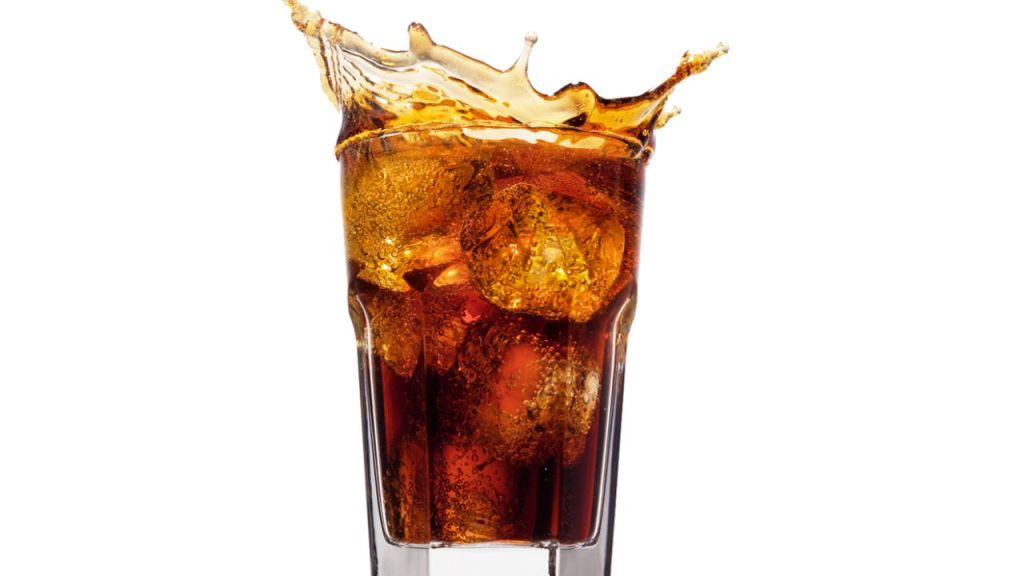
In the early 1980s Coke’s lead in market share over Pepsi was eroding. Particularly with young people who would be cola drinkers for years to come. Something had to be done. No senior Coke-Cola executive would survive an announcement that Pepsi had overtaken Coke as the number one choice. But what?
Coke’s formula had remained unchanged for nearly 100 years, but that formula was losing out to the competition. The marketing of Coke was top-notch. Their 1971 “I want to buy a world a coke” advert with young folks of different ethnic backgrounds standing on the top of a mountain in Italy is arguably one of the best marketing campaigns ever. Coke was outspending Pepsi by $100M and still losing ground.
Perhaps if they made Coke taste more like Pepsi they could turn things around. In the 1970s, when I used to drink more soda pop than I do today, I could tell the difference between Pepsi and Coke. Pepsi was sweeter.
Would a sweeter Coke do well? The folks at Coca-Cola decided on a blind-tasting test comparing New Coke against original Coke and Pepsi? They tested the concept with nearly 200,000 people and indeed the New Coke performed strongly.

The Coke team was ready to make the change. As they say on their website “We have never been more sure of anything in the history of the company”.
As many of you will know New Coke was an absolute disaster. The product was withdrawn 79 days after its launch. What went wrong? In short, Coke relied on a single point of information, the blind-tasting test. The test itself was flawed. People do not drink cola from plain cans. When they see the familiar red coke can they know what to expect and when they get something different, they are unhappy. Sweet drinks when sipped, taste better than less sweet drinks. But folks do not sip coke, they drink it by the can, they drink it by the bottle. They buy their Big Gulp from 7-11. In volume, sweet drinks are just not as satisfying.
If Coke had tested its new product in more realistic settings, such as in restaurants, or at folks’ homes, it would have had better feedback.
Test marketing is tricky, and you can never be sure that you have got it right. You can improve your chances by understanding how people will use your product in the real world. Ensure your testing mimics reality as closely as possible, and test in multiple scenarios.
Google glasses

In the 1989 film “The Field of Dreams” the lead role played by Kevin Costner is told “If you build it, they will come” Google seemed to believe if they built Google Glasses people would come to buy them. And they expected them to pay a high price for them, $1,500 in fact.
Google seemed to expect the “cool” factor to drive sales. The technology was cutting edge; it was the next step along the information highway. What you wanted to know could be projected onto a virtual screen that hovered in front of your eyes. The device was voice-activated, with no punching fiddly keys on your smartphone. Emergency responders could get up-to-date information relayed to them without having to look away from the event happening in front of them.
But initially, Google did not target law enforcement, or paramedics, etc, it wanted to market the product to the general public. Google is right, people will pay for cool. In 2012 a British judge ruled that Samsung’s tablets did not infringe on Apple’s design patents, because, as he put it, “they are not as cool.”. Cool has value, but only when it is attached to function. Google Glasses could do nothing that your smartphone could do. Why would a consumer pay $1,500 for a device that only made them look cool, an early adopter, someone on the forefront of tech?
Unfortunately, Google Glasses in the mind of most of the public was the opposite of cool.
America’s Saturday Night Live host Randall Meeks made fun of Google Glasses portraying their owners as ineffectual nerds.
To watch a video clip of Randall Meeks Ctrl+Click here
With their ability to take photos and record videos unobtrusively, it was not surprising that they were quickly banned from casinos. The term Glasshole was coined to describe a user of the product.
All of this seemed to come as a surprise to Google’s execs. Sebastian Thurn of Google said “it was much less desirable for me to wear it than I had initially thought” After all who wants to be known as a Glasshole?
How could a company as successful as Google get it so wrong? They were far too inward-focused, developing a business product that fitted with their agenda of gathering as much personal data. They should have been outward-focused, how would consumers react to the product? What benefits did the product bring? How to mitigate privacy concerns, not only for the user but the people around them?
It is essential that you ensure you seek the opinions of others. And opinions from folks who will tell you that you are way off track, rather than just people who will repeat what you want to hear.
The New Yorker wrote a piece about experiences an early adopter had with Google Glasses. To read it Ctrl+Click here.
For an amusing but helpful example of what can go wrong if you do not properly validate your assumptions; Check out this link to a video showing two contestants on “Has Britain Got Talent?” During their introduction, they are confident that they will do well; they compare themselves to leading artists of the day. But, spoiler alert, when they start to sing, they are appalling. I am sure they have asked their family and friends if they can succeed. But they could have never asked anyone who would give them honest feedback. If they had they would have known that they did not stand a chance of success at fame, at least not as singers.
Both Coca-Cola and Google had the resources to survive a launch a product, and to have it fail badly, without it threatening the company’s survival. But the failure of the DeLorean DMC 12 took the company down with it. My younger listeners will likely be familiar with the DeLorean DMC as the converted time machine from the film “Back to the Future”.
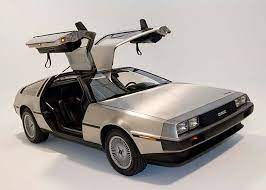
John DeLorean left General Motors to start his own car company in 1975. He was able to attract 200 million pounds in funding. DeLorean decided to build the car in Northern Ireland, where unemployment was high and the UK government offered manufacturing incentives. Delays hit and production didn’t begin until 1981.
Despite its obvious good looks the DMC 12 suffered from a lack of consumer interest due to its price and poor performance. DeLorean had wanted to sell the car for $12,000 hence its name. High production costs meant when it was launched it was priced at $25,000, which compared unfavorably with Chevrolet’s Corvette which was priced at $16,000. This lack of demand drove the company to bankruptcy. Fewer than 9,000 vehicles were built.
Minimum Viable Product
The concept of the minimum viable product can reduce the risk that you bet the farm on the launch of your product or service. The idea is to build the most basic form of your product, which you can sell and get consumer feedback. Sahil Livingia, the founder of Gumroad, suggests that your MVP should be capable of being developed over a weekend. Maybe that is extreme but I am sure you get the point, do not invest so much in your first product that it will bring your company down if it fails.
 Why Start-Ups fail