
In this post; Quincy Apparel launches its fall season. Sales are good, but the financial results are disappointing.
Please read Quincy Apparel Parts One and Two to learn about the company’s journey so far.
By now Quincy had raised $950,000. $250,000 from friends, family, and angel investors. The balance had been obtained from two venture capital investors. One of the VCs had previously invested in Warby Parker, a provider online eyewear, Bonobos, an online seller of men’s pants, and Modcloth, another woman’s fashion retailer that allowed women to buy fashion styles from earlier decades. As this VC had experience in closely related business they seemed an ideal fit. The funds from the VC investors would be released in tranches in May, October, and December. The release of these funds was conditional on Quincy reaching certain sales targets. Ken Landis, a co-founder of Bobbi Brown cosmetics also funded Quincy and joined the board.

Quincy launched its fall/winter collection in September. The range of garments offered was increased to 18, up from the 12 garments offered in the Spring collection.
Sales got off to a strong start, reaching $42,000 in October and $62,000 in November. 17% of the customers who purchased garments in November made repeat purchases. Of customers who had made purchases during the Spring season 39% made repeat purchases. However, the gross margin in October was only 25%, far below the projected 53%.
The average return rate was 35% which was on par with other online retailers who offered free shipping and returns. Quincy had used a 20% return rate for their financial projections. First-time customers returned 38% of purchases, and repeat customers returned 25% of purchases. The return rate for repeat customers, who had been satisfied enough to make further purchases, was above the return rate that Quincy had forecast. Just over two-thirds of the returns were due to concerns on how well the garment fit. Return rates increased as the collection offered became more complicated.
The business was now struggling to make good on the promises it had made to its customers. During the spring season, these challenges were explained away as growing pains. But despite having hired five employees, things were still a mess in November.
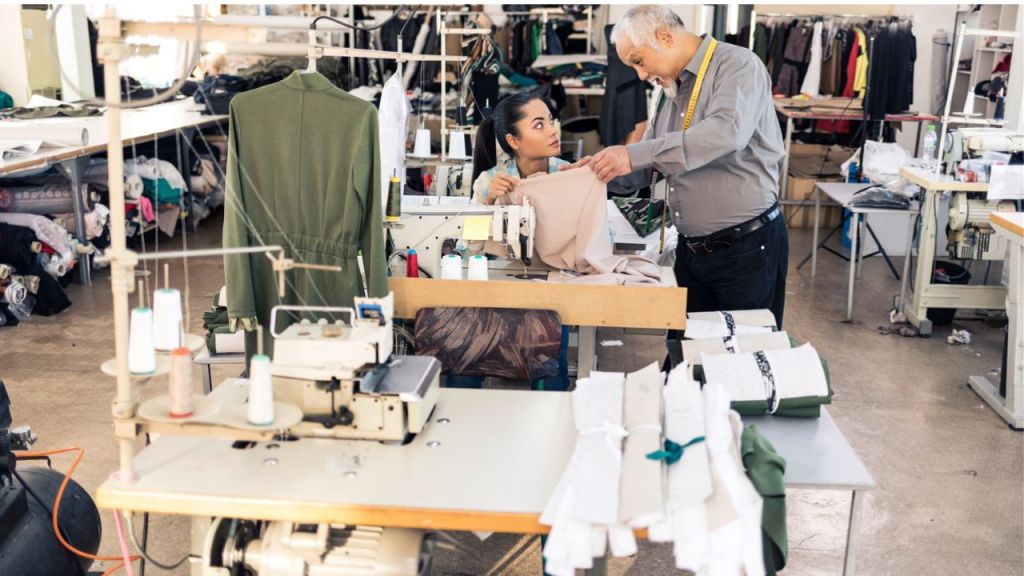
Establish apparel companies have a defined process to move a garment step by step from design to production. That process may vary from company to company, but the employees know the process and have learned how to work together to get things done.
As a start-up, Quincy Apparel had to create its own processes. The new employees had never worked together, and the team did not gel. Every step through the process was a challenge. The employees seemed to lack a sense of urgency about getting things right. The pink jacket lining, which stained shirts if the wearer sweated; with more dedication was an issue that could have been solved before it arose. There was friction between the team members and people resisted taking on tasks that they felt were not part of their responsibilities. Alex attempted to set expectations and enforce reasonable demands, while Christina tried to keep things calm. This undermined Alex’s authority as the employees soon learned that they could complain to Christina about Alex.
Some of the folks Quincy hired seemed to believe they were doing the company a favor by working for a nascent, and underfunded start-up. They were not able to find people who thought that Quincy was a great opportunity to get in at the start of the next generation of online fashion retailing.
As is often the case when things are getting difficult the co-founders had their differences. It was difficult to keep these discrete so the co-founders would go to Starbucks to have more private conversations.
Unfortunately, in November, Christina’s grandmother fell critically ill and sadly died. Christina returned home to spend time with her grandmother during her last days. Christina returned after the Thanksgiving holiday to the fact that Quincy needed more capital if they were going to launch the next Spring’s collection.
With three months of strong revenue growth but with high return rates and higher costs than budgeted Christina headed to Silicon Valley to raise funds from investors.

Quincy’s position was far from unique, it is not uncommon for start-ups to have mixed results. And certainly not unusual that costs had been underestimated.
While Christina was seeking funds, Alex Nelson kept the team focused on their daily operations and maintained an air of optimism. Despite running out of cash, meetings had been scheduled with great investors, and the business was still alive.
Each of the investors Christina met wanted to keep in touch but declined to invest. The company had seven weeks of cash left, not enough to launch its third season. It was time to consider the options available to the company. Christina sought advice from two mentors, an experience VC investor and a successful cofounder of an online home décor retailer. The three of them met, Christina laid out the situation and asked, “What do you think?” The response was devasting, “It’s not going to happen” The mentors recommended that Christina should seek a bridge loan from the existing investors, and if the loan was not made available the company should be wound down in a responsible manner that would allow it to meet payroll and other obligations and return remaining funds to the investors. By doing this, the founders would protect their professional reputations and relationships. The mentors also recommend that the company’s lawyer be consulted about the best way to handle the process.
Christina and Alex met to discuss the next steps. It was an emotional meeting. They agreed that they did not have the resources to deliver on their original value proposition of providing well-fitting garments for all women. Christina was in favor of limiting the company’s sizing option to reduce complexity. If a bridge loan could be sourced, the simpler company had a chance of survival. Alex felt that abandoning the goal of serving all women was to lose the company’s key differentiator. She could not accept the idea of sacrificing her vision in a company she passionately believed in.

If the company was shut down now, they could meet all their obligations, even pay the employees a week’s severance pay. Even if they got the loan, half the employees would have to leave anyway.
The co-founders had hit an impasse and the board meeting to decide the direction the business would take was set for the following day.
At a difficult board meeting, it was decided that Alex’s approach of continuing to seek funds to maintain the original vision of the company would prevail. Christina was forced out of the business.
Alex soldiered on alone at the helm of the company. But after five weeks she could see that her plan was not going to work. Further investment would not be forthcoming. It was time to close the business down.
On the face of it, this business should not have failed. It was founded by two intelligent, focused individuals with HBS MBAs. With their trunks shows, a classic use of lean start-up methods, they had validated that there was a demand for their product. Using the garments presented at the shows as a minimum viable product they incorporated the feedback received to refine their product range. The Spring Launch was focused; they put their efforts into getting the sizing right for tops, jackets, shirts and dresses. Bottoms, pants and skirts, would follow later. Sales growth had been strong, October sales were $42,000, and November increased to $62,000. Repeat purchases had been encouraging, 17% of customers made repeat purchases. An impressive 39% of customers who purchased from the Spring collection returned to buy items from the fall collection. Quincy had clearly identified what their target market wanted.
So why did such a promising company fail?
Was it due to a lack of capital? Was it due to the founder’s lack of industry experience? Did they hire the wrong people? Were their financial projections too optimistic? Were the investors a poor match for the founder’s vision?

What are your thoughts?
Acknowledgment: Much of the material for this case study came from Professor Eisenmann’s excellent book “Why Start-Ups Fail” There is a lot more to his book than I will cover in this series. Check out his website to learn more.
 Why Start-Ups fail