In this post, I continue to look into why a promising start-up, Quincy Apparel, that had everything going for it, failed. Today I look at the launch of their first season.
The story so far.
The business was founded by two Harvard Business School MBA graduates Christina Wallace and Alex Nelson, Quincy Apparel was going to bridge the gap between companies that offered affordable women’s suits, which in the words of Quincy’s business plan, “gape and hang like ill-fitting boxes,” and high-end brands that offered more fashionable suits at higher prices. Quincy would offer the high-end brands better fitting and feeling clothes at lower prices.
Quincy Apparel would follow a business model pioneered by two vertically integrated start-ups. Bonobos, which sold men’s pants, and Warby Parker, which sold eyewear, both were achieving success both in the marketplace and in attracting investor interest. Both companies demonstrated that the direct-to-customer model could work in the fashion industry.
Quincy Apparel developed a new size system that allowed better-fitting clothes and tested the concept at a series of trunk shows. The trunk shows had proven to be a success; with 50% of young professional women attending making purchases averaging $350. These were not token purchases but a vote of confidence in the product and the fledgling company.
The company was about to launch its first season.
For full details of Quincy Apparel’s early daysplease read Quincy Apparel Part One.
Preparing for a hard launch.
The co-founders of Quincy Apparel recognized that offering multiple sizing options for each garment would add complexity to the production process and therefore result in higher costs. But they felt that the direct-to-consumer model, eliminating the wholesaler and retailer, would enable them to be cost-competitive. The fact that inventory would be held at a single location rather than multiple retail outlets would be a further advantage. Inventory management would be a challenge, so a two-step production process was developed. Large-scale production that took the garments to 80% of completion would be outsourced to larger factories. These semi-finished items would be stored at Quincy’s rented warehouse. The warehouse would do multiple duty as a showroom, and an office.
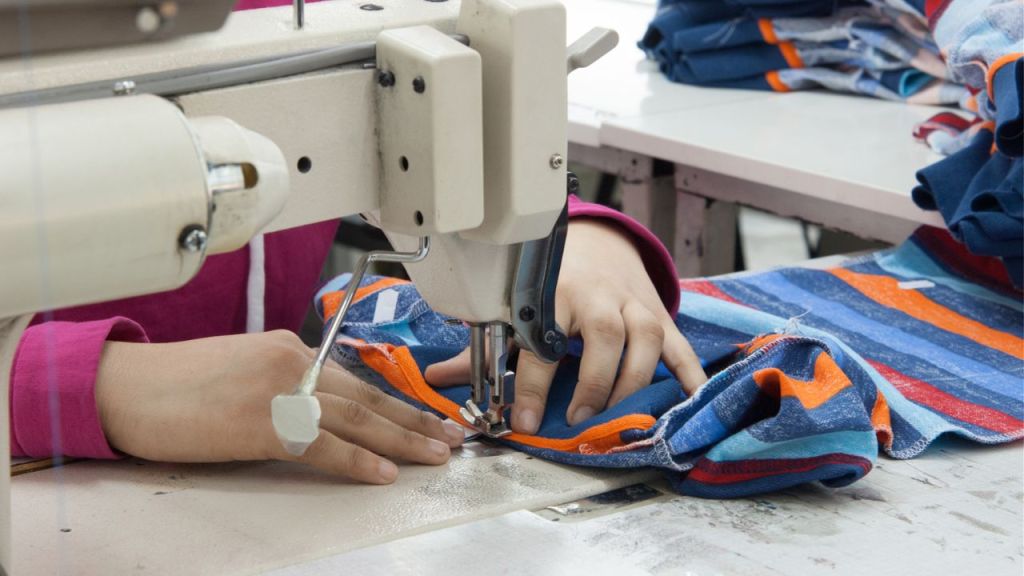
When a customer placed an order, the garments would be sent to a finishing unit for the final sewing to complete the production process. The finished garment would be returned to Quincy’s warehouse for despatch to the customer.
As production was based on actual demand the founders hoped to avoid the end-of-season markdowns that often erode profitability in the fashion industry. To put this in context, in 2022 Boston Consulting Group stated “Retailers around the world invest more than $1 trillion in their in-season and end-of-season markdown programs”
The direct-to-consumer was expected to account for 85% of sales; the balance coming from in-person sales and sales at trunk shows. Customers purchasing online would be encouraged to order two sizes, so they could compare the two and decide which was the better fit. Free shipping both for delivery and returns would be included.
A target of $1.2 to $1.5 million was set for the seed funding stage. This would be enough for three fashion seasons which the founders felt was enough time to work out the glitches in design and production. Spring 2012 would be their first season. Prior to May 2012, they had raised $250,000 in funding from family friends, and angel investors. This was enough to launch a limited spring collection. They convinced two VC firms to invest. Ken Landis, the cofounder of Bobbi Brown Cosmetics, also invested and joined Christina and Alex on the three-person board of the company. In total, they raised $950,000, enough for two seasons.
The co-founders believed they could manage design and production themselves, at least while the company was in the start-up phase. Their initial screening of potential manufacturers was to contact those factories that had e-mail addresses.
They quickly found that the fashion industry is not technically savvy. Production was highly dependent on personal relationships.

Without those close relationships Quincy would be told a production batch would be ready in two weeks, but when they came to collect nothing was ready. Or they would be quoted costs 50% higher than the original bid.Or that there was no longer any room on the production schedule as a more important customer had placed a rush order.
Around this time the cofounders agreed on their future roles, but not on who would be the boss. Nelson would focus on production, procurement, and e-commerce. Wilson would handle other aspects such as HR, business development, marketing, and investor and press relations. Overall strategy, brand identity, etc would be agreed between them.
Together they decided to launch a limited 11-piece spring collection which would allow them to demonstrate traction and attract investors. This season would focus on jackets, blouses, and dresses to validate the use of bust/length sizing for tops. They would wait until the next season to improve sizing for pants and skirts.
As mentioned in Part One, a function of a minimum viable product is to generate customer feedback. The feedback Quincy received prompted them to use new fabrics and different styling. In effect, they abandoned their prototypes to match more closely what their customers wanted. And they would be producing on a larger scale, which meant they had to improve their planning and forecasting techniques.
For now, Quincy abandoned marketing to college kids; that market could be captured later as a brand extension.

The trunk shows that had tested the MVP also demonstrated that the Young Professional Woman was a much more promising sector than college students.
Even with this narrowed focus, the total addressable market was huge. The Total Addressable Market (TAM), also referred to as the total available market, is the overall revenue opportunity that is available to a product or service if 100% market share was achieved. Quincy estimated the TAM for their business was 5 million young professional women who spent $1.9 billion dollars on work apparel. Quincy’s sales projections for 2016 (year 5) forecast represented a 3% market share with annual sales of $52 million at 57% gross margin delivering an EBITDA (earnings before interest, tax, depreciation, and amortization) of $18 million. This is nearly 35% of sales, which is an exceptionally high EBITDA percentage. NYU Sterns lists very few industries that can achieve this level of earnings, and fashion retailing is not one of them.
If you are interested in the multiples for your industry you can find NYU Stearns’s analysis current as at January 2023 here.
To launch the business Quincy used Shopify for their commercial website. Shopify is a hosting service that provides software and a platform for online retailers. The site included a sizing tool to allow customers to find their “Quincy size”.
The owners were still developing their production skills. Mistakes were being made that should have been avoided.
Similarly, the owners at times used themselves as the fit models. Ms. Nelson recalls a blouse for which she was the fit model; the problem Ms. Nelson has very small wrists. When they took the blouse for a photoshoot, the models, who are not known for their large bones, could not their hands through the cuffs. Again, the industry professionals within the team had failed to notice the problem.
As they broadened their industry knowledge, the co-founders came to understand the roles and responsibilities of positions within the fashion industry. They realized that Quality Assurance was critical, but no one within their team had previous responsibility for this function. They recognized they must strengthen their team. A technical designer, a quality assurance professional, and a product developer were hired. The product developer took the ideas from the design team and managed the process through to completion including fabric purchasing.
Customer Acquisition Cost. Quincy was able to keep their Customer Acquisition Cost low. They relied on word of mouth, incentivized referrals, trunk shows, and showroom events. Unpaid social media played a big part, along with conference appearances and press coverage. The media loved their story of an affordable product tailored to fit all women. They were challenging the status quo of the fashion industry; an industry people love to hate. The fact that the garments were made in America was an added bonus.
Using a freelance press relations officer the company secured coverage in fashion trade magazines and consumer magazines such as Cosmopolitan. They also appeared in the business press including titles such as The New York Times, the FT, and the Wall Street Journal. They even appeared on television programs.
The founders attracted customers via inbound marketing. They hired an editorial director to blog on fashion trends and styles for the professional environment. The blog also included advice on business etiquette, interview techniques, and other tips helpful to young professional women.
In summary, the team has used its product validation and MVP to refine its market to tops for young professional women. This still leaves them a huge Total Addressable Market of $1.9 billion.

Their financial projections anticipate a 3% market share in five years delivering Gross Margins of 57% and an EBITDA of 18%. Do you think these financial projections are reasonable?
Production teething problems highlighted some elementary mistakes. Mistakes that their team should have identified. What does this tell you about the level of commitment from their employees to the venture?
Customer Acquisition Costs have been kept very low by using social media, press coverage, and blogs to promote the company. Customer Acquisition Cost for the target segment is less than $100 for customers with an estimated lifetime value of $1,000. Do you think this balance is right? Should they have invested in paid advertising?
The company is about to launch its second season with an extended product range but, without enough funds to carry them through to the third season. What would you do? Follow the path chosen by the founders? Continue with the limited range of the first season? Dedicate one founder to raising enough funds for the third season?
Acknowledgment: Much of the material for this case study came from Professor Eisenmann’s excellent book “Why Start-Ups Fail” There is a lot more to his book than I will cover in this series. Check out his website to learn more.
 Why Start-Ups fail