
Regulatory issues normally do not determine the success or failure of a start-up. Providing you conform to the rules laid down in your country regarding accounts, compliance, taxes, employment law, data protection etc. Even in the most business-friendly countries, there are a myriad of rules and regulations you must follow to stay within the law. These can be researched and should not present a problem to your fledgling business. Indeed governments around the world are trying to make life easier for start-ups as they recognize that SMEs are the cornerstone of their economies. And SMEs are borne out of start-ups. According to the World Bank in 2003 the average number of days required to start a business was 52. Sixteen years later in 2019, the average was 20 days.
But there are times when a start-up is breaking new ground and the regulators are playing catch up to the new realities. And this can, in extreme cases, destroy an entire marketplace.

An example I personally witnessed was the rise and fall of the bike-sharing industry in Singapore. Bike Sharing is an attractive last-mile option for commuters; connecting them with public transport to their final destination.
Public transport in Singapore is cheap and highly efficient and thus is widely used. Originally the Singapore government had planned to introduce bike sharing in a test market in the west of the island. But with the arrival of privately funded companies offering bike sharing in 2017, the government shelved its plans.
The market was dominated by three companies, one local Singaporean company, and two Chinese-based competitors. The model they adopted was the use of dockless bikes. That is bikes that could be left anywhere, rather than needing to be returned to a fixed docking station. This delivered a more flexible product for the customer and negated the cost of setting up docking stations for the operators. The three operators vied for market dominance. The total fleet of available bikes rose to over 100,000 in less than a year of the launch of the industry. Intense competition meant lower prices for the consumer. Initially, the companies charged a deposit when you signed up for their service, this was quickly waived. Passes were introduced that allowed unlimited use of bikes for a period, typically a month. Financially the industry was on shaky ground.
But it was the behavior of some customers that led to the industry’s downfall. Bikes were abandoned anywhere, often impeding access to popular areas such as around public housing or construction sites. Bikes were vandalized. Bikes were dumped in canals. Broken bikes littered the streets. There was public criticism of the government that there was too little regulation of the industry.
The Singapore government which enjoys a significant majority in parliament and the support of the bulk of the population is well placed to act rapidly when required. And act they did. They introduced limits on the size of the fleets that could be operated. They set up designated parking areas where bikes could be left. They mandated that broken bikes had to be removed from the street within 24 hours. The government made the bike operators responsible for compliance with the regulations. Many of the operators were unable to meet all the regulations and their licenses were either suspended, revoked, or voluntarily returned. By 2019, only two years after the industry was launched, it was essentially dead.
The cutthroat nature of the competition undoubtedly contributed to the industry’s demise, but government regulation played its part. The regulations were needed. Could the bike-sharing industry have done better? I believe so. They should have anticipated that some users would abuse the opportunity to leave bikes anywhere, abandoning them where they were a public nuisance. Although vandalism is not as common in Singapore as in some countries, they could have planned for a certain level of vandalism. That folks who hire a bike for a short ride might not take the best care of the bike, and that a high level of maintenance and a need to quickly collect broken bikes would be essential could have been foreseen.
If the ride-sharing companies in Singapore did nothing to encourage misbehavior in their customers; the same thing cannot be said of Juuls Labs.
Juuls Labs are a manufacturer of alternatives to combustible cigarettes. The company’s home page starts with this statement.
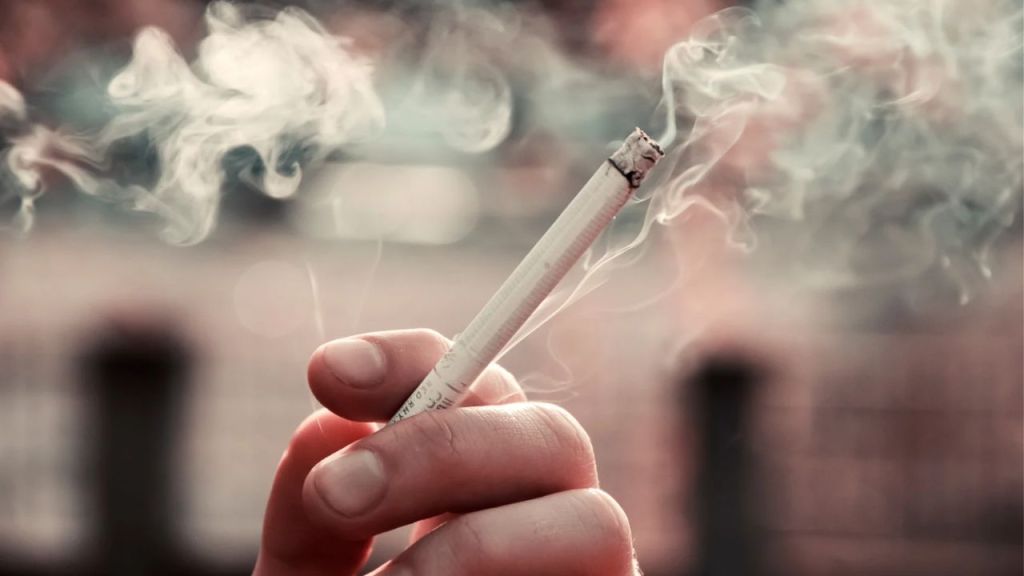
“Juul Labs exists for one clear purpose: to provide adult smokers worldwide an alternative to combustible cigarettes. We do not want any non-nicotine users, especially those underage, to try our products, as they exist only to transition adult smokers away from combustible cigarettes.
But according to Josh Stein, attorney general for North Carolina, this was not always the case. He claims that the company purposely targeted teenagers with nicotine-rich products. And as we know nicotine is highly addictive. Get teenagers addicted and they could be your customers for life.
An ill-fated advertising campaign “Vaporized” which should twenty-somethings enjoying themselves and looking cool while sucking on their Juul’s vapes was seen as many as evidence that the company was targeting the youth market. Buying advertising slots on the Cartoon Network and Nickelodeon certainly does not help the company in its assertion that it never intended to market to kids.
Whether or not the company deliberately targeted teenagers, in June 2021 they settled with the North Carolina Department of Justice for $440 million plus agreeing to restrictions on their marketing programs that reduced the possibility their ads would be seen by young people.
Juul’s woes continued in 2022 when in June the FDA effectively banned Juuls Labs’s products from the US market. Although this was temporarily lifted the following month
And last month the company said it had reached settlements with about 10,000 plaintiffs covering more than 5,000 cases. It has not said how much it will pay, though the Wall Street Journal reported the deal is valued at $1.7 billion.
Could Juul Labs have avoided these costs? Possibly. My internet research points to Juul thinking of itself as a tech company, not a tobacco company. Understandable as raising funding for a tech start-up would be much easier than finding funding for a tobacco company. Even if they positioned themselves to the outside world as a tech company, internally they should have considered themselves as purveyors of nicotine. If they had hired more big tobacco executives the lessons learned by the cigarette industry would have been taken into account. Lessons that would have included that marketing an addictive product to young people is not a good idea. The market for products to help folks quit smoking is large. There are so many different estimates of the size of the market out there that I am not going to give you a number. Just suffice to say it is the billions of dollars. According to John Hopkins medical vapes are less harmful than cigarettes, less harmful, not safe. There is a role for the product in helping addicted adults move to a less harmful alternative.

Uber’s car-hailing platform was, is, a disruptive technology made possible by advances in cell phone technology. Customers love the fact that they can summon a taxi or bike from the comfort of where they are. Rather than stand in the rain attempting to hail a cab.
It’s great news for drivers too, they can find their next fare rapidly and reduce their idle time. In fact, Uber’s model is so successful it has been copied by many companies around the world. Some of whom have been so successful they have forced Uber out of some markets. Such as Didi did in China or Grab in Indochina. Note some people say Lyft launched earlier than Uber as their predecessor company Zipcar launched in 2007 versus Uber’s launch in 2009.
Considering its strong value proposition it’s hard to understand why Uber adopted some many questionable practices.
In July of last year, a British newspaper, The Guardian, published an article that stated “A leaked trove of confidential files has revealed the inside story of how the tech giant Uber flouted laws, duped police, exploited violence against drivers and secretly lobbied governments during its aggressive global expansion.” The leak spans a five-year period when Uber was run by its co-founder Travis Kalanick.
These unsavory tactics had their consequences. For example, Uber twice lost also a growing trend that their drivers should be considered employees and entitled to all the benefits that come with employed status.
Today Uber is run by Dara Khosrowshahi and hopefully much more ethically than in the past.

In summary as a start-up be sure you understand the rules and regulations that apply to you in the country or countries where you have operations.
There is a wealth of information available via Google and there are firms that can help ensure you never fall foul of the law. If you are launching a new, yet unregulated industry, consider how customers may abuse your product. Look to parallel industries where you can gain the benefit of hindsight. And of course, act ethically at all times.
 Why Start-Ups fail