
CB Insights a market intelligence platform analyzed why 110 Tech Companies failed.
The second most common cause of failure was that there was no demand for the product or service.
How can you avoid spending hours and money developing your business only to find that no one, or at least not enough people, wants your product or service?
Example Quibi
Mobile-focused streaming service Quibi, which shut down in October 2020 just 6 months after launching and raising a mammoth $1.8B, found itself in this position. As reported in the Wall Street Journal, founder Jeffrey Katzenberg and chief executive Meg Whitman said in a letter to employees at the time of the shutdown:
“There were ‘one or two reasons’ for Quibi’s failure: The idea behind Quibi either wasn’t strong enough to justify a stand-alone streaming service’ or the service’s launch in the middle of a pandemic was particularly ill-timed. Unfortunately, we will never know, but we suspect it’s been a combination of the two.

Before you start your business do your research and make sure that customers are interested in buying your product. You believe in your product but in reality, it’s probably not perfect. That’s why you need “demand validation”.
To test and validate your business idea ask three questions:
What problem do my potential customers have?
What is the solution to that problem?
Why should people pay money for my product?
Behind these questions are further questions. Who are my potential customers? Will my solution appeal to my potential customers? How much are my potential customers willing to pay?
Using your best thoughts on the answers to these questions start to sketch out your value proposition or unique selling proposition. A unique selling proposition, which defines your company’s unique position in the marketplace, is an important part of creating pricing power and a business that customers genuinely love.
A strong unique selling proposition lets you stand apart from competitors and actively focus your energy on creating things that cater to your ideal group of customers.
As Seth Godin put it:
Instead of working so hard to prove the skeptics wrong, it makes a lot more sense to delight the true believers. They deserve it, after all, and they’re the ones that are going to spread the word for you.”
Having a unique selling point—even one that ostracizes some prospective customers—is a competitive advantage that allows you to avoid the trap of trying to please everyone.
Why You Need a Unique Selling Proposition
It’s likely that many of your prospective customers have difficulty deciding which option in your industry is the one that deserves their time, money, and trust.
This selection can be a daunting process for customers who don’t have the experience to know what separates one competitor from another.
That’s why your job is to assist them by making your unique selling proposition obvious, different, and memorable enough that they can see exactly what your business has to offer that the other guys do not.
At this stage, you only have ideas, guesses, and hypothesizes that need to be confirmed or refuted. How this can be achieved will be covered in the next Segment – Data Validation – First Steps – Your initial research.
First steps into Data Validation – your initial research.
Can be thought of as internal research or desktop research. Use sources that are available to you to start to refine your ideas.
Use the three questions you asked yourself in Segment 1 to begin your demand validation.
The objective is to confirm that your potential customers really have the problem you think they have, and that they would be interested in your solution.
Avoid confirmation bias.
People searching for solutions often use Google. Find out what people are using Google for.
Use Google’s Keyword planner or Moz’s Keyword Planner to find out how many people search for specific words or phrases.
Make a list of the terms you think people will use when searching for a solution for the problem you are trying to solve.
It is to be hoped that many people are already searching for your solution. If not; then it’s back to the drawing board.
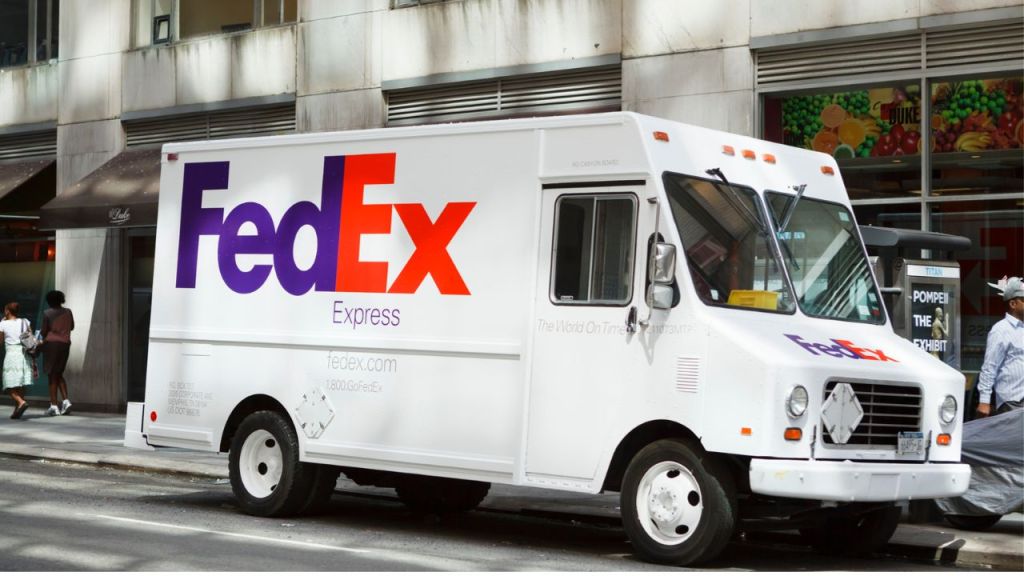
Identify potential competitors using the same keywords. Analyse their value proposition. Can you do better? Can you see a gap in the market? Take FedEx’s classic USP:
“When it absolutely, positively has to be there overnight.”
- The boldness of its claim makes it memorable. FedEx is promising that they can deliver a parcel the next day;
- It’s tangible because FedEx has the network and infrastructure to get a package to its destination on time, and;
- It’s customer focussed. FedEx has found a unique part of its service that customers value.
Canva is an online design and publishing platform aimed at making it easy for anyone to create and share vector graphics. Its USP reflects this:
“Empowering the world to design”
It’s a nod to the simplicity of Canva’s tools. It also separates the platform from competitors like Adobe PhotoShop and Illustrator, and ProCreate, whose products are aimed towards experienced artists.
While rival tools offer more advanced editing features, they come with a steeper learning curve. Canva’s drag-and-drop shapes and elements let complete novices design a professional image, flyer, or document in minutes.
By understanding its place in the market, they’ve been able to unearth a competitive advantage. It’s a lesson in how to turn what could be seen as a weakness into a strength.
Online Conversations.

Join appropriate forums where your potential customers may be found. Ask about their problems and current solutions related to your business idea. Are people suggesting workaround solutions?
Consider the marketplace:
• Is the market growing or contracting? How quickly?
• How many potential customers are there?
• What barriers to entry exist?
• What is the intensity of the competition?
• Is there a threat of new entrants or an established player entering your market?
Segment 3 – Engage with your potential customers.
If the results of the research covered in Segment 2 have shown that there are potential customers for your product you need to learn more about them.
Zoom down from the 30,000-foot view to get real answers to questions such as:
Are people willing to pay for your product? How much? How do they solve their problem currently? What do they think of your idea?
The more specific the better. Facebook, LinkedIn are too broad. Focus on your likely potential customers. Bloggers Influencers Podcasters who comment on your chosen field.
Identify your ideal customer, where will they be found? How do they make their buying decisions?
Identify at least 10 sources, the more the better.
Get specific – identify individuals you want to talk to. Ensure they represent the range of potential customers.
Reach out, personalize, and do not sell.
Analyse the responses. Look at the response rate – this could be indicative of the level of interest.
Based on the three questions you asked yourself from Segment 1 – propose your solution to interested parties. Include a price point. The price point should be at a level that will sustain your business. High is better than low at this stage.
Segment 4 – Launch your minimum viable product.

The Minimum Viable Product evolves from the Lean Start Up Theory. Which espouses the fail early philosophy.
MVP is the first working version of a product, with just enough features to satisfy potential clients and collect & analyse their feedback for the next product version, with minimum effort and resources required. The next, complete product version is developed after elaborating on the initial user feedback.
A minimum viable product is not an MVP until it sells.
Example of an MVP – Amazon;
Most people know that Amazon began as an online bookstore. You may be unaware, though, that Jeff Bezos started out by buying books from distributors and shipping them to customers every time his online store received an order. The high book sales meant it made sense to keep adding more products to the store, then acquire warehouses, and finally provide each user with a personalized experience on the website.
The virtual MVP.
Build a landing page – test advertising to direct traffic to your site.
Include a price and a buy now button. This does not go to check out but to a page that explains the situation and suggests the view leaves an e-mail address.
Validates that people are willing to part with their cash to acquire your product.
No money to build an MVP or pay for advertising? Consider content marketing. Write a blog with content that your target market might find interesting. Using the knowledge of where your customers hang out – post messages etc directing folks to your blog.
There is no substitute for research. It can be frustrating when you just want to get up and running.
But more haste less speed. The steps covered in this series Is there a demand for my product can help you avoid the second leading cause of failure for startups.
 Why Start-Ups fail